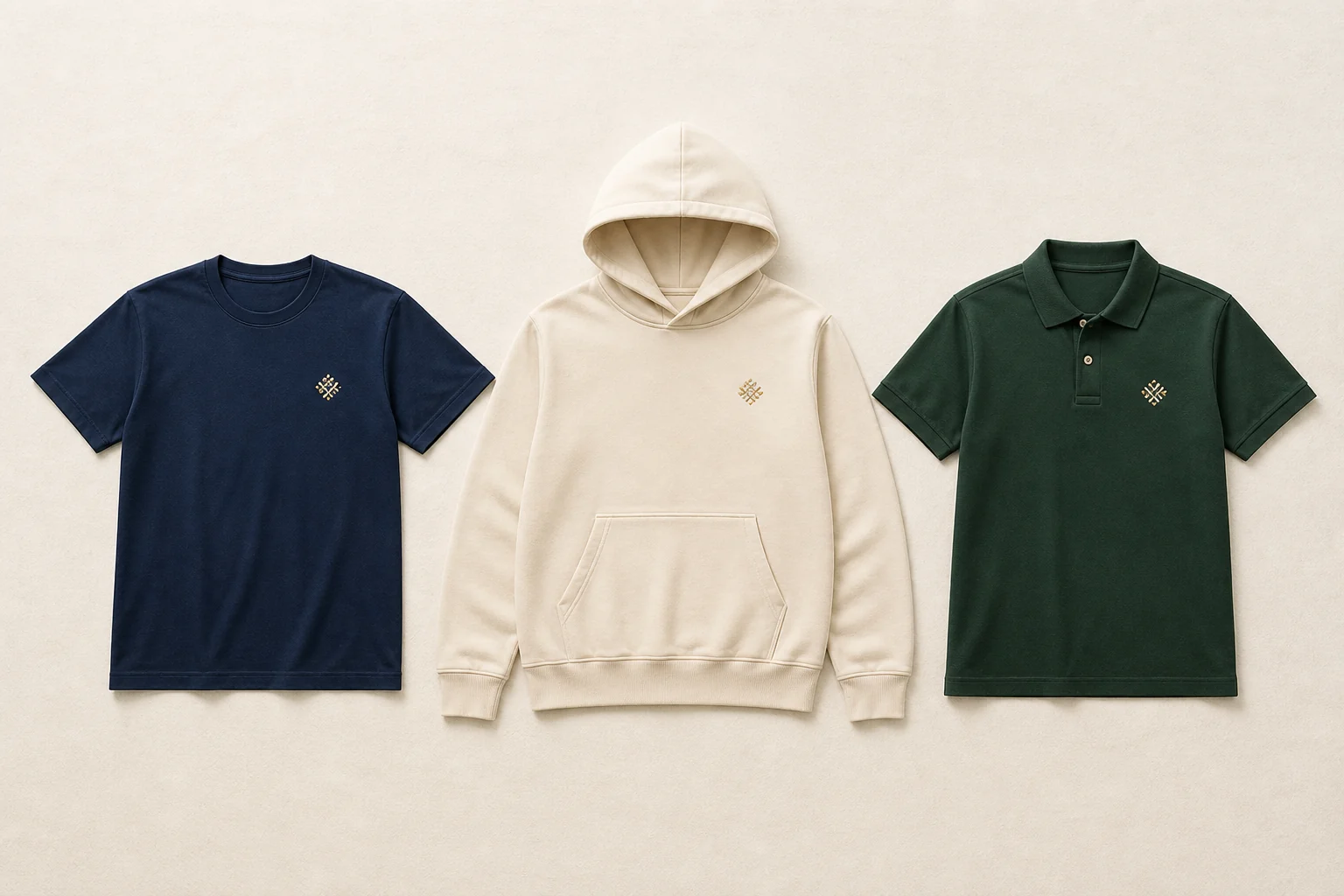
At Togethread, usually yes—when the written quote confirms the mix. Compatible youth, adult, and extended sizes plus coordinated tees, hoodies, or polos may count toward one 50-piece order when they share an approved design system. Every exact garment, color, size range, artwork version, decoration, and personalized line still needs its own quantity and price.
Supplier rules are not universal. Printful's current bulk-order policy ties its discount to at least 25 pieces of the same base product while allowing sizes, colors, and designs to vary. Custom Ink's current multi-product instructions allow colors and styles to be added, while some different product types create separate order numbers. Use those differences as a reminder to get your own order structure confirmed in writing.
Mixing sizes: one roster, product-specific charts
Bulk custom pricing starts with quantity × exact garment × decoration specification. Mixed sizes may count toward one coordinated order, but that does not guarantee every blank has the same availability or base cost. Confirm these differences:
- Extended-size blanks may use more fabric or a different supplier price.
- Youth sizes may use a different blank, cut, or base cost than the standard adult range.
Ask for a line-by-line size range instead of a vague “complexity” fee. How to build your size list →
Mixing garment types: one visual system, separate line items
A practical starting point is one shared visual system, adapted and approved on each garment. A class emblem on tees and hoodies may count toward one coordinated order, while the two garment costs and any placement changes remain separate quote lines. If the group is choosing between two fleece silhouettes, compare the hoodie and crewneck using the same fabric, fit, artwork, and written price before locking the split. A different design, print size, placement, or decoration method can create another production setup.
- Shared design across tees, hoodies, and polos: may qualify as one coordinated order; the quote still lists each garment and decoration line.
- Names, numbers, or role labels: quoted by method, dimensions, placement, garment, and the final proofread list.
- Unrelated artwork or decoration systems: may create a separate minimum, setup, or production route.
What a typical mixed order looks like
- School class: 45 tees for students + 10 hoodies for teachers and organizers. School spirit wear →
- Sports team: 40 jerseys + 8 hoodies for the bench + 4 polos for coaches. Compare team apparel, then price the complete roster and garment split →
- Company team building: 45 tees for the event + 8 polos for hosts and client-facing staff. Company orders →
- Fundraiser: 50 tees for walkers + 10 hoodies for organizers or donors. Fundraiser shirts →
Mixing garment colors: approve every colorway
Compatible garment colors can sometimes share one DTF design system, but the supplier must confirm the exact blank, stock, size range, quantity by color, artwork version, decoration, and pricing. Light and dark garments may need different artwork treatment or underbase decisions. Approve a separate digital colorway for every produced garment color; the mockup checks layout and contrast direction, not physical color, fabric, or fit.
How Togethread confirms a mixed 50+ order
The minimum applies to the approved order structure, not automatically to every garment combination. For example, 40 tees + 10 compatible hoodies may qualify when the written quote confirms the shared design, exact garments, colorways, placements, and variations. A designer reviews the full brief and confirms the first-mockup timing in writing. Large wedding groups can combine the wedding party, family, guests, and event crews; an 8–20-person core party should use a local or no-minimum route instead of ordering unwanted extras. Use the 50+ bachelorette and wedding-weekend roster guide, then compare the full wedding group route →
Checklist before you ask for a quote
- One base artwork file plus every requested name, number, role, or colorway variation
- Garment split: exact product, color, and quantity for every tee, hoodie, or polo
- One named size list tied to each exact garment—never a guessed standard curve
- Decoration method, dimensions, and placement on every garment
- Named destination and required in-hand date